Online couples counselling for neurodivergent partners works best when the format itself removes friction, not when it forces two different processing styles into the same script.
- Online Couples Counselling offers 60-minute video sessions from £80, with qualified therapists you can vet before booking - Consider.
- Neurodivergent couples do better with sessions that allow processing pauses, camera flexibility, and clear structure over free-flowing dialogue.
- Ask about pacing and sensory setup before your first session in 2026 - this matters more than the therapist's general experience.
- Long-distance, LGBTQ+, and blended-family neurodivergent couples often need a second, more specific guide alongside this one.
Why this matters
A lot of relationship advice assumes both partners process conflict the same way: talk it through, read the room, land on a resolution in real time. That model breaks down fast when one or both partners are autistic, have ADHD, dyspraxia, or another neurodivergent profile that changes how they process spoken language, sensory input, or emotional pacing.
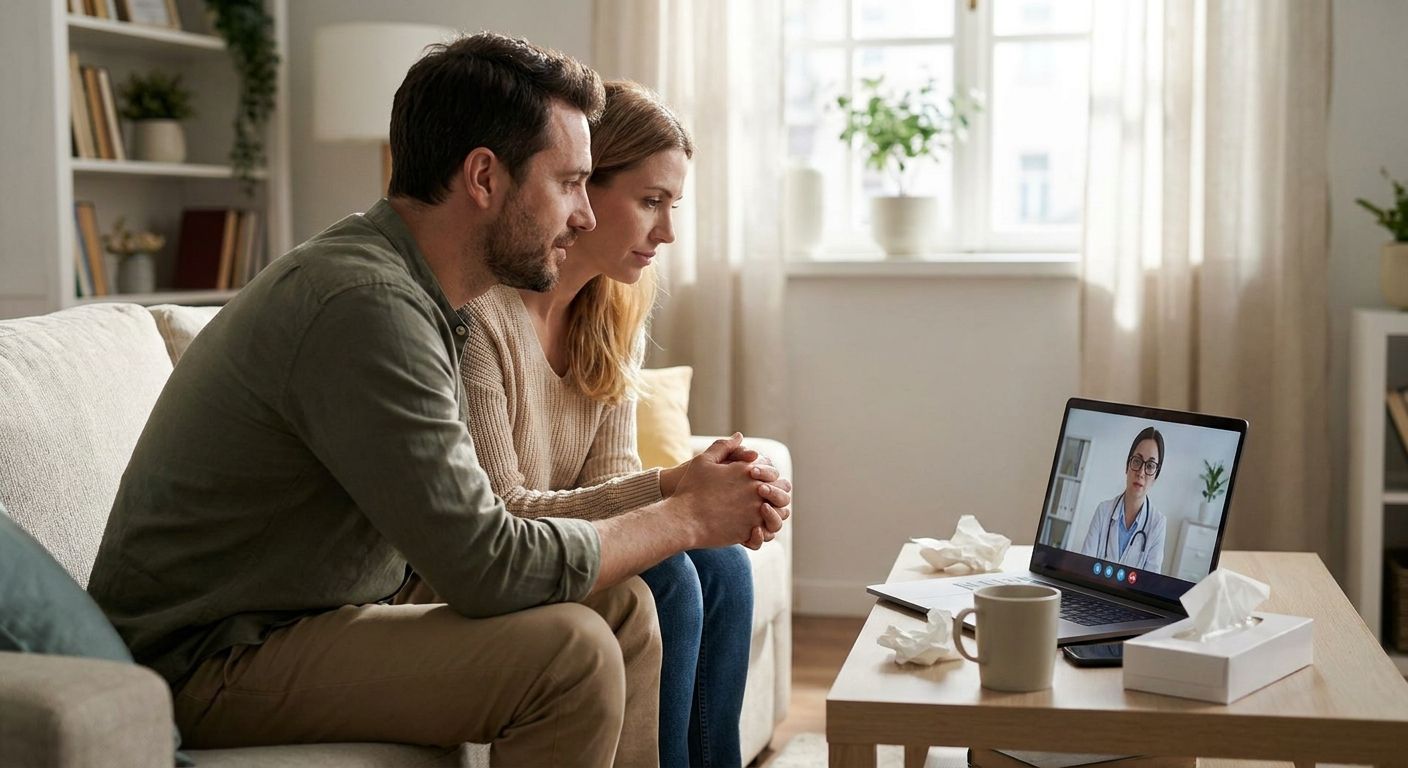
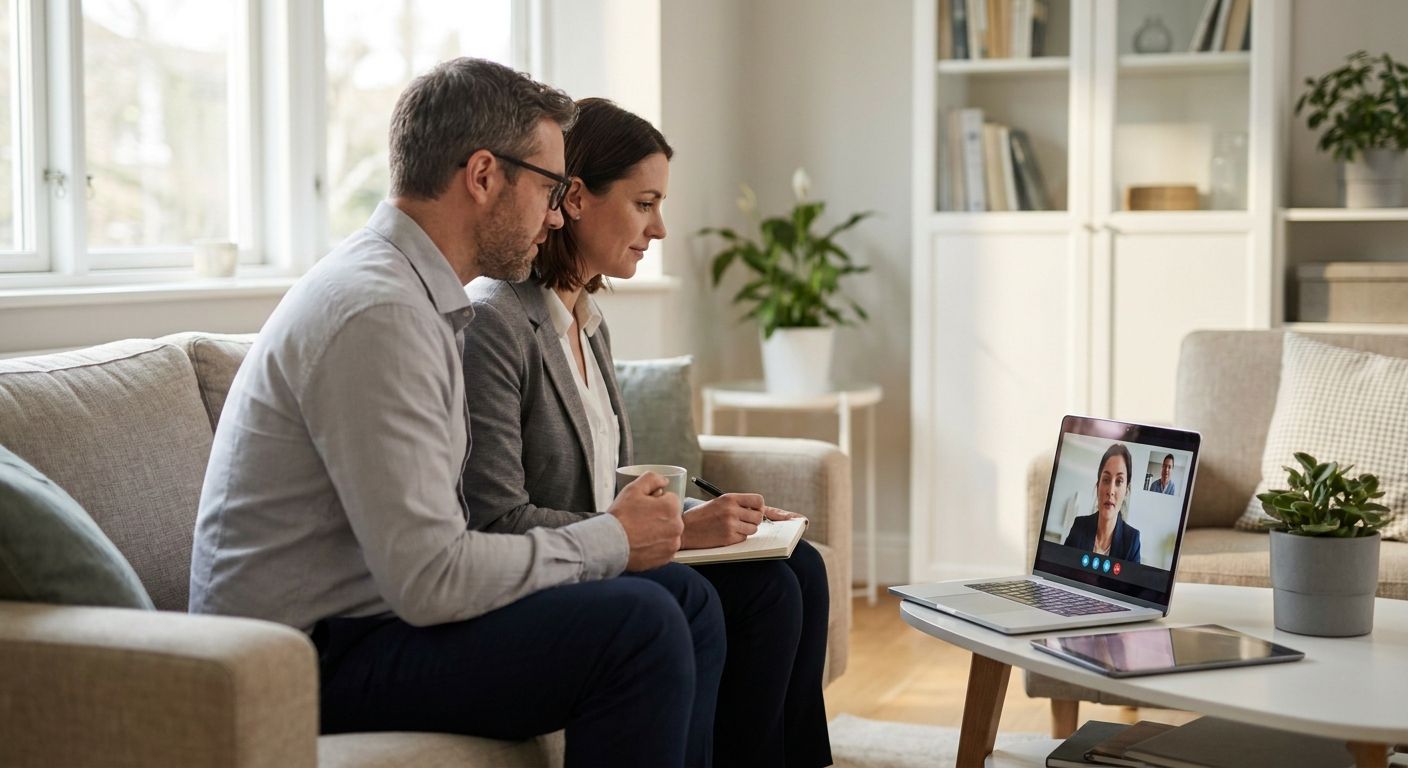
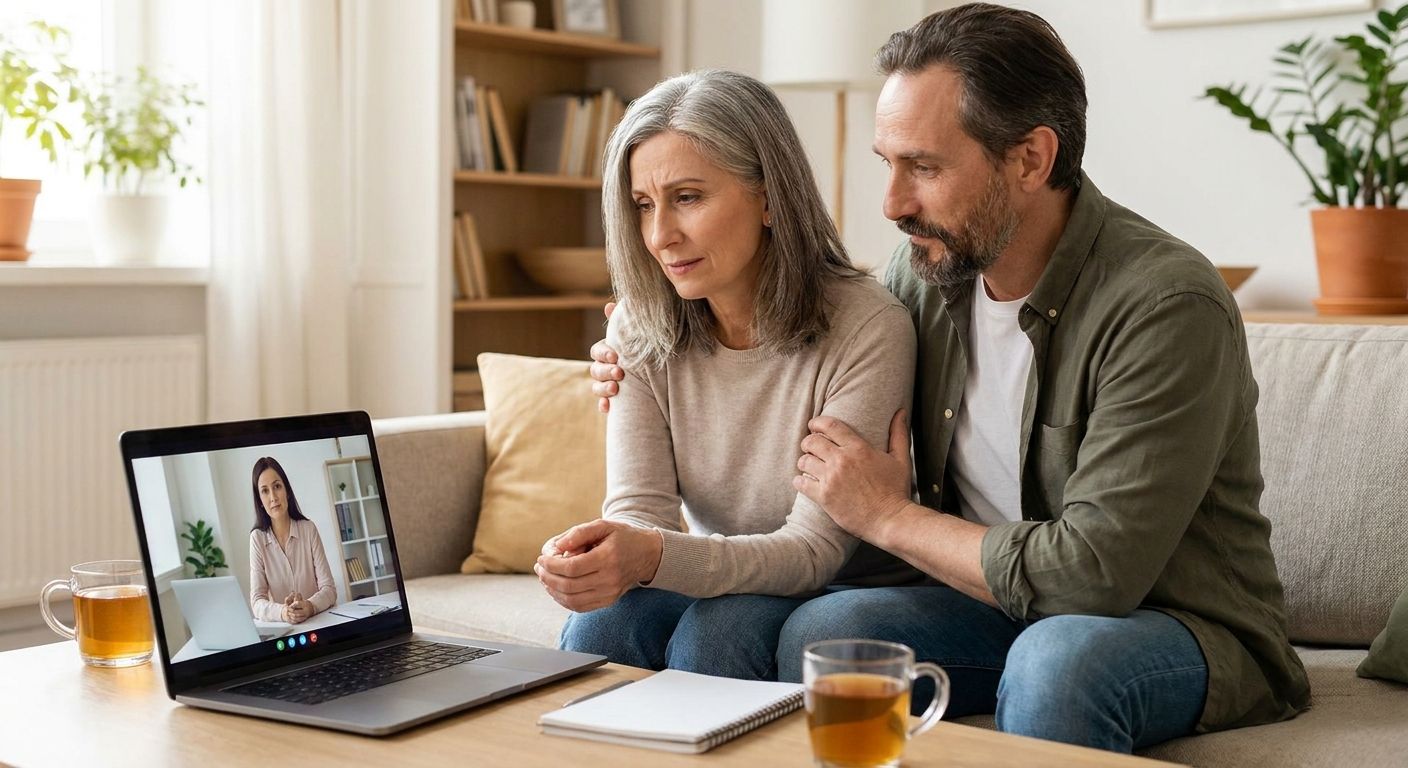
Online formats solve part of this automatically. You control your lighting, your seating, your camera angle, and whether you're on a sofa or at a desk. Online Couples Counselling runs 60-minute video sessions from £80 with therapists you can ask direct questions before you commit to a course of sessions - the confidential format means you're not managing a waiting room or unfamiliar building on top of the conversation itself.
The gap most couples hit isn't whether online counselling works for neurodivergent partners - it's finding a therapist and a session structure that doesn't accidentally recreate the same communication mismatch the couple is trying to fix.
Who this is for
This guide is for couples where at least one partner has a diagnosed or self-identified neurodivergent profile - autism, ADHD, dyspraxia, sensory processing differences, or a combination - and where standard talk-therapy pacing has felt rushed, overwhelming, or vague in the past. It's also for couples navigating a recent diagnosis, where one partner is still working out what neurodivergence means for how they argue, listen, or need to recover after a hard conversation.
What to look for in couples counselling for neurodivergent partners
Session structure over free association
Open-ended "tell me what's on your mind" prompts work for some couples and stall others completely. Ask whether the therapist works from a loose agenda - naming the topic before the session starts, checking in on what each partner wants to cover - because that structure gives a neurodivergent partner something concrete to prepare for instead of an open-ended social demand.
Processing time built into the pace
Some partners need several seconds - sometimes longer - to form a response after being asked a direct question. A therapist who jumps to fill silence, or redirects to the other partner too fast, can make one person feel permanently behind in their own session. Ask how the therapist handles pauses before you book.
Control over the sensory environment
Video sessions already remove the fluorescent lighting and shared waiting room of an in-person clinic. Push that further: confirm you can keep your camera at a fixed angle, sit somewhere with your own lighting, or mute notifications without it reading as disengagement to the therapist.
Familiarity with neurodivergent relationship dynamics
A therapist who treats every communication difference as a symptom to correct rather than a difference to work with will frustrate both partners fast. Ask directly, before booking, whether the therapist has worked with neurodivergent clients and how they adjust their approach.
Flexible scheduling around routine and energy
Masking through a full working day before a 6pm session leaves little capacity for a hard conversation. Look for scheduling flexibility that lets you book at a time when neither partner is running on empty.
Clarity on what happens between sessions
Ambiguity about "homework" or follow-up expectations creates unnecessary anxiety for partners who prefer explicit instructions over implied ones. Ask what, if anything, is expected of you between sessions - and get a plain answer, not a vague one.
Scenarios worth matching to a specific guide
Neurodivergence rarely shows up in isolation - it overlaps with other relationship contexts that shape what "the right session" looks like. Four common overlaps, with a straight verdict on each.
The everyday case: one partner recently diagnosed, both still adjusting. The core criteria above - structure, pacing, sensory control - cover this well. Buy: book a standard session and raise the diagnosis directly with the therapist in the first few minutes.
LGBTQ+ neurodivergent couples navigating identity and communication style at once. Masking pressure often compounds across both identities, and a therapist unfamiliar with either dynamic can miss what's actually going on. The LGBTQ+ couples guide covers what to check for on that side specifically. Consider: read both guides before booking rather than treating this one as sufficient alone.
Long-distance neurodivergent couples relying on text between video calls. Distance already strips out in-person cues; add a neurodivergent communication style on top and misreads become more frequent, not less. The long-distance couples guide covers timezone and cadence issues that this guide doesn't. Consider: pair the two guides if distance is a factor.
Blended-family households where one or both parents are neurodivergent and routine is already stretched thin. Scheduling flexibility matters twice as much here, and the blended family guide covers step-parenting dynamics this guide doesn't touch. Consider: use this guide for the neurodivergence angle and the blended family guide for the household logistics.
What to avoid
- Therapists who treat structure requests as avoidance. Asking for an agenda or advance notice of topics is a reasonable accommodation, not resistance to the process - a therapist who reframes it as the latter is the wrong fit.
- Generic relationship worksheets with rigid scripted phrases. "I feel X when you do Y" formulas can feel artificial and add a layer of translation work for a partner who already processes language differently under stress.
- In-person-only options when travel or unfamiliar spaces are a genuine barrier. If getting to and sitting in an unfamiliar office adds enough friction that the session itself becomes secondary, the online format is doing real work, not just adding convenience.
“If a session leaves you more overwhelmed than when you started, the format is wrong, not you.”
Verdict comparison table
| Criterion | What to check before booking | Verdict for neurodivergent couples |
|---|---|---|
| Session structure | Does the therapist work from an agenda? | Buy if yes, Skip if fully open-ended |
| Processing pace | Do they leave room for pauses? | Buy if confirmed upfront |
| Sensory control | Can you fix your own lighting/camera setup? | Buy - online format already supports this |
| Neurodivergence familiarity | Have they worked with neurodivergent clients? | Consider - ask directly, don't assume |
| Scheduling flexibility | Can you book around energy levels, not just availability? | Consider - flag it at booking |
Book a session that fits how you communicate
60-minute video sessions with qualified therapists, from £80.
FAQ
What is the best couples counselling for neurodivergent partners in 2026?
The best fit is a therapist who works from a clear session structure, allows processing pauses, and lets you control your own sensory environment - not necessarily one marketed specifically as a neurodivergence specialist. Ask about pacing and structure directly before booking rather than relying on a label.
Is online counselling better than in-person for neurodivergent couples?
Online sessions remove a waiting room, unfamiliar lighting, and travel friction, which reduces sensory load before the conversation even starts. Whether it's better depends on whether you also need face-to-face cues that video can flatten out.
How much does couples counselling cost in the UK in 2026?
Online sessions with Online Couples Counselling start from £80 for a 60-minute video session. Pricing varies elsewhere depending on therapist experience and session length.
Do I need to tell the therapist about a neurodivergent diagnosis before booking?
It's not required, but flagging it before or at the start of the first session lets the therapist adjust pacing and structure from minute one. Waiting until later in the process means the first session may not reflect what actually works for you.
Can both partners be neurodivergent and still get useful counselling?
Yes - two different processing styles in one relationship is common and manageable with the right structure. The key is a therapist who treats both styles as valid rather than trying to convert one partner's communication style into the other's.
What if free-flowing conversation makes a session feel worse, not better?
That's a signal to ask for more structure, not a signal that counselling itself isn't working. Request an agenda-based format or written prompts ahead of the session and see if that changes the outcome.
How long does a course of couples counselling usually take?
This varies by couple and by what you're working through, and a qualified therapist will discuss expected pacing with you directly rather than committing to a fixed number upfront.
Is video counselling confidential?
Online Couples Counselling sessions are run as confidential 60-minute video sessions with qualified therapists. Confirm your own privacy setup at home - a closed door and headphones go a long way on your end.
One last thing
The single question that changes the most outcomes isn't "do you work with neurodivergent clients" - it's "what happens in this session if one of us goes quiet." A therapist's answer to that tells you more about fit than any general experience claim, and it takes about fifteen seconds to ask before you book anything in 2026.